The Home Upgrades That Make a Small House Feel Bigger
Light, color, storage and a few clever swaps that make small rooms feel more open, without moving walls.
In this guide
Key takeaways
- Light and color do more to make a room feel bigger than almost anything else.
- Furniture that shows more floor space makes rooms feel more open.
- Built-in and vertical storage frees up floor space.
- Most of these ideas don't need a contractor.
Introduction
You don't need to knock down walls to make a small home feel more spacious. Designers use a few simple tricks to make rooms feel brighter, more open and less crowded, and many of them are weekend projects.
Here are nine upgrades that make a small house feel bigger.
Advertisement
1. Paint with light, soft colors
Light colors reflect more light, which makes walls feel further away. Soft whites, pale grays and light warm neutrals work well. Painting the trim and ceiling in the same or a slightly lighter shade helps the edges of the room blur, so it feels larger.
2. Add mirrors in the right places
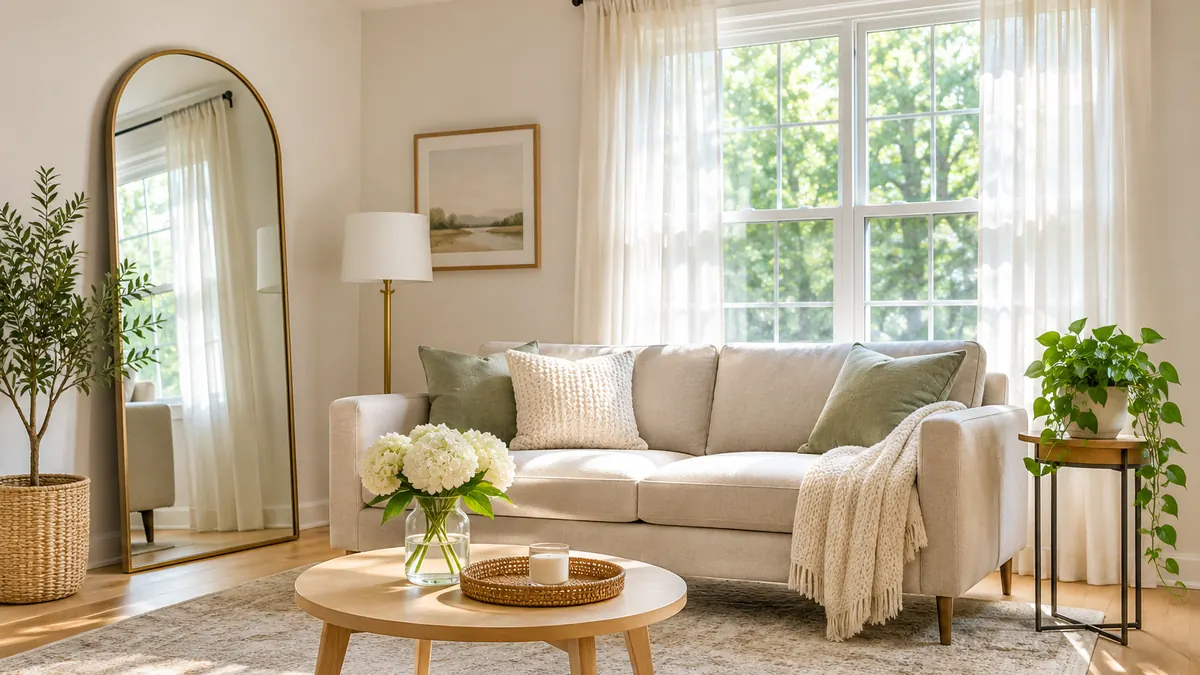
A large mirror opposite or beside a window bounces daylight around the room and creates a sense of depth. Mirrored cabinet doors and closet doors can do the same in bedrooms and bathrooms.
9 more sections · 6 min read
Continue reading this guide
Watch a short ad to read the rest of this guide. You'll only need to do this once for this guide.
Not now, show me another guide →3. Layer your lighting
A single ceiling light leaves corners dark, and dark corners make a room feel smaller. Combine ceiling lights with lamps, wall lights and under-cabinet lighting so light reaches every part of the room. Warm white LED bulbs keep it cozy.
4. Choose furniture with legs
Sofas, chairs and cabinets raised on slim legs let you see more of the floor, which makes a room feel more open. Glass or acrylic coffee tables take up almost no visual space.
Advertisement
5. Hang curtains high and wide
Mounting curtain rods close to the ceiling and extending them past the window frame makes windows look bigger and ceilings look higher. Sheer or light fabrics let in more daylight.
6. Use the same flooring throughout
Changing flooring from room to room breaks a home into small sections. Running the same flooring through connected rooms helps the space flow, so it reads as one larger area.
Advertisement
7. Build storage up, not out
Tall shelves, wall-mounted cabinets and storage that reaches toward the ceiling leave more floor space clear and draw the eye upward. Built-ins around windows or under stairs use space that would otherwise go to waste.
8. Swap swinging doors for pocket or sliding doors
A swinging door needs clear floor space to open. Pocket doors slide into the wall, and barn-style sliding doors run along it, so you can use that space for furniture.
Advertisement
9. Clear the clutter
The simplest upgrade costs nothing. Clearing surfaces, keeping only a few decorative pieces and giving everything a home makes a room look calmer and larger straight away.
Quick wins under an afternoon
- Swap heavy curtains for sheer ones.
- Move furniture a few inches away from the walls to create breathing room.
- Replace a bulky coffee table with a smaller round or glass one.
- Add a large rug that fits under the front legs of the sofa and chairs. One big rug makes a room feel larger than several small ones.
- Clear the floor in front of windows so light can reach further into the room.
Advertisement
Conclusion
A small home can feel surprisingly spacious with the right light, color and storage. Start with the low-cost changes, such as paint, mirrors, lighting and decluttering, and work up to bigger projects like built-ins or new doors as your budget allows.
Common questions
What color makes a small room look bigger?
Light, soft colors generally make rooms feel larger because they reflect more light. Painting walls, trim and ceiling in similar light tones helps too.
Do dark colors always make rooms feel smaller?
Not always. A dark color used throughout a small room can make edges feel less defined and the space cozy. Lighting matters a lot either way.
Are pocket doors hard to install?
Fitting a pocket door into an existing wall usually means opening the wall, so it's often a job for a professional. Barn-style sliding doors are simpler to add.
This guide is general information. Follow manufacturer instructions, local building codes and safety advice, and use a licensed professional for work that requires one.