How to Fix a Running Toilet: A Step-by-Step Guide
Most running toilets come down to three parts inside the tank. Here's how to find the problem and fix it.
In this guide
Key takeaways
- A running toilet is usually caused by the flapper, the fill valve or the chain.
- A few drops of food coloring in the tank can show whether water is leaking into the bowl.
- Most fixes need basic tools and parts from a hardware store.
- Turn off the water supply before you replace any parts.
Why it's worth fixing quickly
A toilet that keeps running can waste a large amount of water. The US Environmental Protection Agency says a leaky toilet can waste around 200 gallons a day, which can show up as a noticeably higher water bill.
The good news is that most running toilets can be fixed in under an hour, with no special skills.
Advertisement
How the tank works
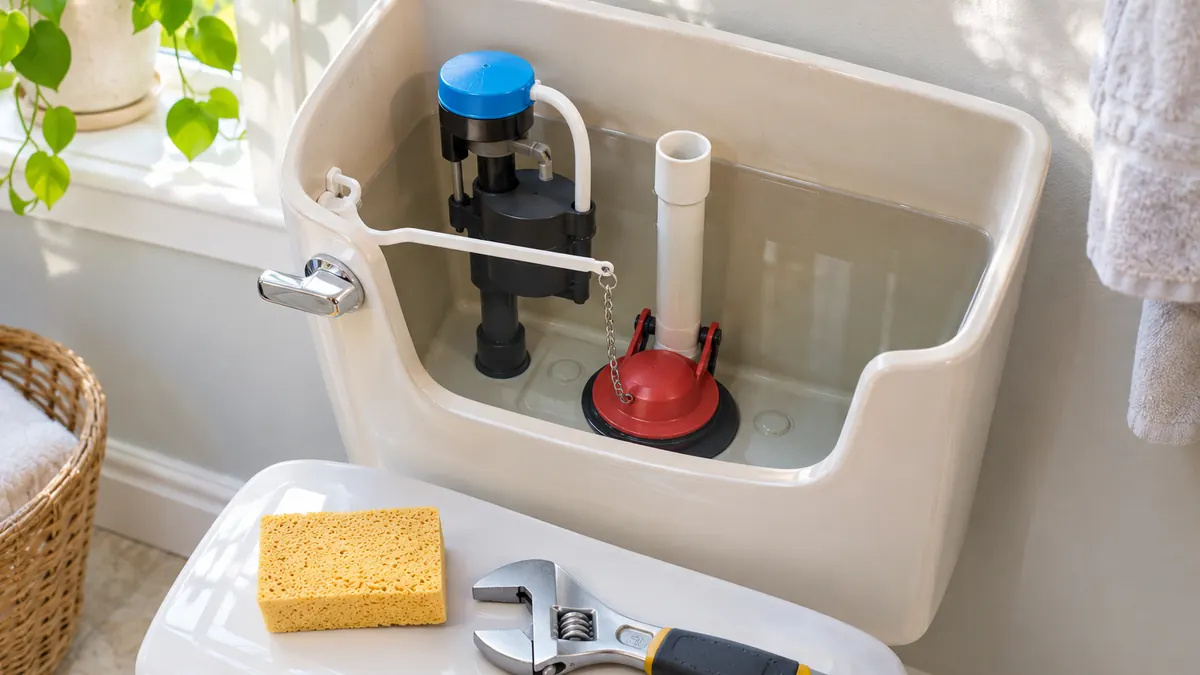
Lift the tank lid and you'll see three main parts:
- The flapper: a rubber seal at the bottom of the tank. It lifts when you flush and drops back down to seal the tank.
- The chain: connects the flush handle to the flapper.
- The fill valve: usually on the left, it refills the tank after a flush. A float tells it when to stop.
There's also an overflow tube, an open pipe in the middle of the tank that stops the tank from overflowing.
Find the problem first
Watch what happens inside the tank after a flush:
- Water is spilling into the overflow tube: the water level is set too high. See Step 2.
- The tank keeps refilling every few minutes: the flapper is probably leaking. See Step 3.
- The fill valve hisses and never fully shuts off: the fill valve may need adjusting or replacing. See Step 4.
5 more sections · 6 min read
Continue reading this guide
Watch a short ad to read the rest of this guide. You'll only need to do this once for this guide.
Not now, show me another guide →Step 1: Check the chain
If the chain is too short, it holds the flapper slightly open. If it's too long, it can get caught under the flapper and stop it from sealing.
Adjust the chain so there's a little slack, about half an inch, when the flapper is closed. Unhook it from the handle arm and move it to a different hole or link. Flush a few times to check.
Step 2: Adjust the water level
The water should stop about an inch below the top of the overflow tube. Many tanks have a line marking the right level.
- Float cup (on the fill valve): squeeze the clip or turn the adjustment screw to lower the cup.
- Float ball (on a metal or plastic arm): turn the screw where the arm meets the valve, or gently bend a metal arm downward.
Flush and let the tank refill to check the new level.
Advertisement
Step 3: Replace the flapper
Flappers wear out over time, warp or build up mineral deposits. A new one is inexpensive.
- Turn off the water at the valve behind the toilet, turning it clockwise.
- Flush to empty the tank, and hold the handle down to drain as much as possible.
- Unhook the chain and slide the old flapper off the pegs on the overflow tube.
- Take the old flapper to the store to match the size, usually 2 inches or 3 inches.
- Fit the new flapper, attach the chain with a little slack and turn the water back on.
While the tank is empty, wipe the seat where the flapper sits. Mineral buildup there can stop a new flapper from sealing.
Step 4: Replace the fill valve
If the fill valve won't shut off after adjusting the float, replacing it is the next step. Universal fill valve kits fit most toilets and include instructions.
- Turn off the water and drain the tank. Sponge out the water that's left.
- Put a towel down, then disconnect the supply line under the tank.
- Unscrew the locknut under the tank and lift out the old valve.
- Fit the new valve, set its height to match the overflow tube, and tighten the locknut by hand plus a small turn.
- Reconnect the supply line, clip the refill tube onto the overflow tube, then turn the water on and check for leaks.
Advertisement
When to call a plumber
- Water is leaking around the base of the toilet.
- The tank or bowl is cracked.
- The shutoff valve won't turn or is leaking.
- You've replaced the flapper and fill valve and it's still running.
Common questions
Why does my toilet run for a few seconds by itself?
This is often called a phantom flush. It usually means the flapper is leaking slowly and the fill valve is topping up the tank. Try the dye test and replace the flapper.
Do I need special tools?
Usually not. A sponge, towel, adjustable wrench and the replacement part are enough for most fixes.
How often should a flapper be replaced?
There's no fixed schedule. Replace it when it no longer seals, feels stiff or warped, or the dye test shows a leak.
Sources and further reading
This guide is general information. Follow the manufacturer's instructions and safety advice. If you're unsure, call a qualified professional.