The Small Habits That Help People Pay Off Credit Cards Faster
Simple, practical habits that cut interest and speed up paying down card balances.
In this guide
Key takeaways
- Paying even a little more than the minimum can save a lot of interest.
- Your statement shows how long minimum payments would take to clear the balance.
- Choose one payoff method, the highest rate first or the smallest balance first, and stick to it.
- Automatic payments help you never miss a due date.
Introduction
Paying off credit cards can feel slow, especially when interest keeps adding to the balance. But small, steady habits can make a real difference to how quickly the balance goes down and how much interest you pay along the way.
Here are eight habits that help.
Advertisement
1. Read the minimum payment box on your statement
US card statements must show how long it would take to pay off your balance if you only make the minimum payment, and how much it would cost. They also show the monthly payment needed to clear the balance in three years.
Comparing those two numbers is often the moment the cost of minimum payments really sinks in.
2. Pay more than the minimum, even a little
Minimum payments are designed to keep the account in good standing, not to clear the debt quickly. Any amount above the minimum goes toward the balance itself, which means less interest next month. An extra $25 or $50 a month can shorten the payoff time noticeably.
8 more sections · 6 min read
Continue reading this guide
Watch a short ad to read the rest of this guide. You'll only need to do this once for this guide.
Not now, show me another guide →3. Pick a payoff method and stick to it
With more than one card, two methods are popular:
- Highest rate first (the avalanche method): pay the minimum on every card, and put every extra dollar toward the card with the highest interest rate. This saves the most interest.
- Smallest balance first (the snowball method): put extra money toward the smallest balance first. Clearing a card quickly can be motivating.
The method that works is the one you'll actually keep doing.
4. Set up automatic payments
Late payments can lead to fees and, on some cards, a higher penalty rate. Setting up an automatic payment for at least the minimum protects you, and you can still pay extra by hand.
Advertisement
5. Pay twice a month
Some people split their payment and pay every two weeks, often to match payday. It can make the payment feel smaller, and paying earlier in the month can slightly reduce the interest charged on the average balance.
6. Send windfalls straight to the card
Tax refunds, bonuses, cash gifts and money from selling things you no longer need can make a big dent in a balance. Deciding in advance that a share of any windfall goes to the card makes it easier to follow through.
Advertisement
7. Ask for a lower rate
It doesn't always work, but it's worth a phone call. If you've made payments on time, you can ask your card company whether it can lower your interest rate. Any reduction means more of each payment goes toward the balance.
8. Stop adding to the balance
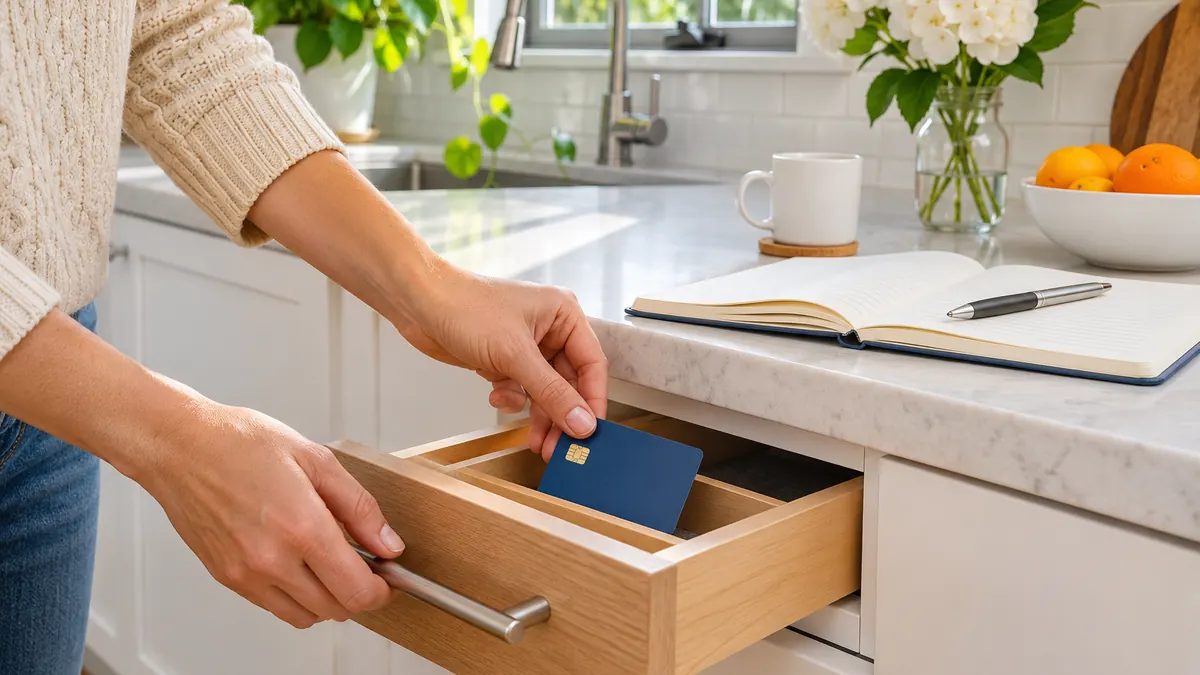
It's hard to pay down a balance that keeps growing. While you're paying off a card, many people move it out of their wallet and phone wallet, and use a debit card or cash for everyday spending instead.
Advertisement
A quick example
Imagine a $3,000 balance at 22% APR. Paying $100 a month would take about 44 months and cost roughly $1,400 in interest. Paying $150 a month would clear it in about 26 months and cost roughly $770 in interest. That extra $50 a month saves about $630 and gets you there 18 months sooner. The figures are rounded and for illustration only.
Conclusion
There's no single trick to paying off credit cards, but small habits add up: paying more than the minimum, choosing a method, automating payments and keeping new charges off the card. If the balance feels unmanageable, a nonprofit credit counselor can help you look at your options.
Common questions
Is it better to pay off the highest rate or the smallest balance first?
Paying the highest rate first saves the most interest. Paying the smallest balance first can feel more motivating. Both work if you stick with them.
Does paying more than the minimum help my credit?
Lower balances compared with your credit limits generally help your credit over time, and on-time payments matter most.
Should I close a card once it's paid off?
Not necessarily. Keeping it open with a zero balance can help your available credit. Consider any annual fee before deciding.
Sources and further reading
This guide is general information, not financial advice. Rates, fees and terms vary by provider and can change. Always check the provider's own terms, and consider speaking to a qualified financial professional about your situation.