How Home Solar Panels Work: Costs, Net Metering and Payback
How a home solar system works, what affects cost and payback, how net metering works and what changed with federal tax credits.
In this guide
Key takeaways
- A home solar system uses panels and an inverter to turn sunlight into household electricity.
- The federal homeowner solar tax credit ended for expenditures made after December 31, 2025.
- Payback depends on system cost, local electricity prices, sunlight and how your utility credits exported power.
- Get several quotes and compare buying, financing, leasing and power purchase agreements.
Introduction
Home solar has become a familiar sight on roofs across the US. But whether it makes sense for your home depends on your electricity costs, your roof, local rules and how you pay for it. The rules have also changed recently.
This guide explains how home solar works, what affects the cost and payback, and what to check before you sign anything.
Advertisement
How a home solar system works
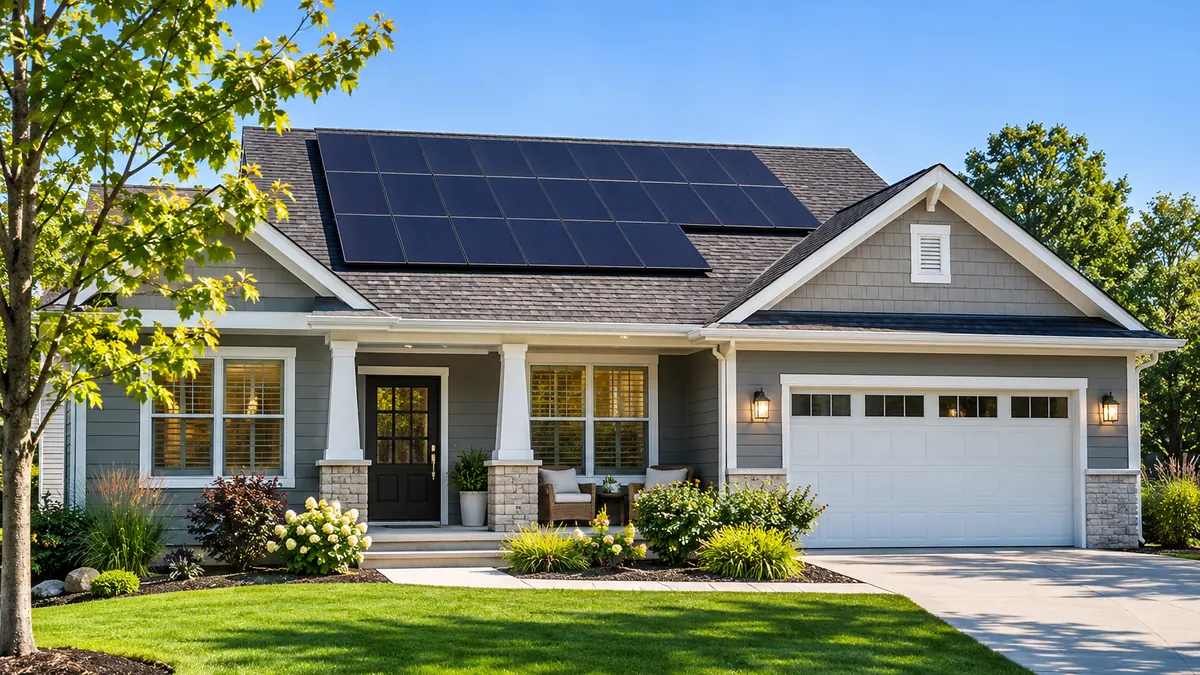
- Solar panels on your roof or in your yard turn sunlight into direct current (DC) electricity.
- An inverter converts it to alternating current (AC), which your home uses. Systems use a central inverter or small microinverters on each panel.
- Your home uses the power first. Any extra flows to the grid, or into a battery if you have one.
- At night or on cloudy days, your home draws power from the grid or the battery as needed.
- A monitoring app shows how much your system is producing.
Net metering and export credits
Net metering is a billing arrangement where your utility credits you for extra electricity your system sends to the grid. Those credits reduce what you pay when you use grid power later.
Rules vary widely by state and utility. Some credit exported power at the full retail rate. Others pay a lower rate for exports, which makes using your own power, or storing it in a battery, more valuable. Check your utility's current rules before you estimate savings.
7 more sections · 9 min read
Continue reading this guide
Watch a short ad to read the rest of this guide. You'll only need to do this once for this guide.
Not now, show me another guide →The federal tax credit has ended for homeowner-owned systems
Until recently, homeowners who bought solar could claim a federal tax credit of 30% of the cost. The law signed in July 2025 ended that credit early. The IRS says the residential clean energy credit will not be allowed for any expenditures made after December 31, 2025, and that installation completed after that date counts as an expenditure made after it.
Leased systems and power purchase agreements are treated differently, because the company that owns the system claims any business credit, not the homeowner. Ask any installer to show in writing how incentives affect your price, and check state and utility incentives, which vary by location. A tax professional can confirm how the rules apply to you.
What affects the cost
- System size, based on how much electricity you use
- Equipment: panel efficiency, inverter type and whether you add a battery
- Your roof: its angle, direction, shading and condition. Some homeowners replace an older roof before installing panels.
- Permits, inspections and utility connection fees
- State and local incentives, where available
Advertisement
Ways to pay for solar
| Option | Who owns the system | What you pay |
|---|---|---|
| Cash purchase | You | The full cost upfront |
| Solar loan | You | Monthly loan payments with interest |
| Lease | The solar company | A fixed monthly payment to use the system |
| Power purchase agreement (PPA) | The solar company | A set price per unit of electricity produced |
Leases and PPAs can have long contracts, often around 20 years, and may include yearly price increases. Read how they affect selling your home before you sign.
How to estimate payback
The payback period is how long it takes for savings on your electricity bills to equal what you paid for the system. To estimate it, you need:
- the total cost after any incentives
- how much electricity the system is expected to produce each year
- your electricity rate and how your utility credits exported power
- any loan interest, maintenance or inverter replacement costs over time
Because the federal homeowner credit has ended, payback periods for purchased systems may be longer than older estimates you may have seen. Use current numbers for your home.
Advertisement
Questions to ask a solar installer
- How much electricity will the system produce in a typical year, and how did you estimate it?
- What incentives are included in your price, and who receives them?
- What are the warranties on panels, inverters, workmanship and roof penetrations?
- Who handles permits, inspections and the utility connection?
- For leases and PPAs: are there price increases, and what happens if I sell my home?
The Federal Trade Commission warns about door-to-door and phone sellers who pressure homeowners into solar deals. Get several written quotes and take time to compare them.
Is your roof suitable?
- Direction: in the US, south-facing roofs usually receive the most sun. East and west can also work.
- Shade: trees and nearby buildings can reduce output significantly.
- Condition and age: removing panels later to replace a roof adds cost, so check the roof's remaining life first.
- Space and rules: some homeowners associations and local codes have rules on panel placement.
Advertisement
Conclusion
Home solar can reduce electricity bills, but the numbers depend on your home, your utility and how you pay. With the federal homeowner tax credit ended, it's more important than ever to compare detailed quotes, check local incentives and net metering rules, and understand the full contract before you sign.
Common questions
Can I still get the 30% federal solar tax credit?
Not for a system you buy. The IRS says the residential clean energy credit isn't allowed for expenditures made after December 31, 2025. Check with a tax professional about your situation.
Do I need a battery?
Not always. A battery can store extra power for evenings or outages, and can be more valuable where utilities pay less for exported power.
How long do solar panels last?
Panels are generally designed to last for decades, with output slowly declining over time. Inverters may need replacing sooner.
Sources and further reading
This guide is general information. Follow the manufacturer's instructions and local rules, and use a licensed professional for electrical work you're not comfortable doing.