Simple Ways to Make a Home Less Appealing to Burglars
Easy steps with lighting, locks and daily habits that make a home a harder target.

In this guide
Key takeaways
- Good lighting and visible security make a home a less attractive target.
- Strong doors and deadbolts slow down a break-in.
- Small habits, like holding mail while away, make a big difference.
- Some security devices may also earn a home insurance discount.
Introduction
Most people don't think about home security until something happens nearby. The good news is that many of the most effective steps are simple and inexpensive. The aim is to make your home look like more trouble than it's worth.
Here are nine simple ways to do it.
Advertisement
1. Light up the outside
Dark entrances and yards give cover. Motion-sensor lights by doors, garages and side paths switch on when someone approaches. Mount them high enough that they can't easily be reached and unscrewed.
2. Make doors harder to force
The Insurance Information Institute recommends exterior doors made of metal or solid hardwood, at least 1¾ inches thick, that fit their frames securely. A good deadbolt on every exterior door helps slow a break-in. Even a strong lock won't help much if it's fitted to a weak door.
9 more sections · 6 min read
Continue reading this guide
Watch a short ad to read the rest of this guide. You'll only need to do this once for this guide.
Not now, show me another guide →3. Secure sliding doors and windows
Sliding patio doors can often be lifted or forced. A wooden or metal bar in the track stops the door from sliding open. Window locks and pins add protection for ground-floor windows.
4. Use lights on timers when you're out
A home that's dark every evening can look empty. Smart bulbs or simple plug-in timers can switch lamps on and off in the evening, so the house looks lived in.
Advertisement
5. Hold your mail when you travel
A pile of mail and packages is an easy sign nobody's home. The US Postal Service offers a Hold Mail service at no charge, which keeps your mail at your local Post Office for between 3 and 30 days. You can request it online.
6. Keep valuables out of sight
Move expensive items away from windows where they can be seen from outside. After a big purchase, break down the box before putting it out for recycling, rather than leaving it whole at the curb.
Advertisement
7. Trim back bushes and trees
Overgrown shrubs near doors and windows give someone a place to hide. Keep plants trimmed below window height, and cut back branches that could help someone reach an upper floor.
8. Lock up ladders and tools
Ladders and tools left in the yard can be used to reach or open windows. Store them in a locked garage or shed.
Advertisement
9. Make security visible
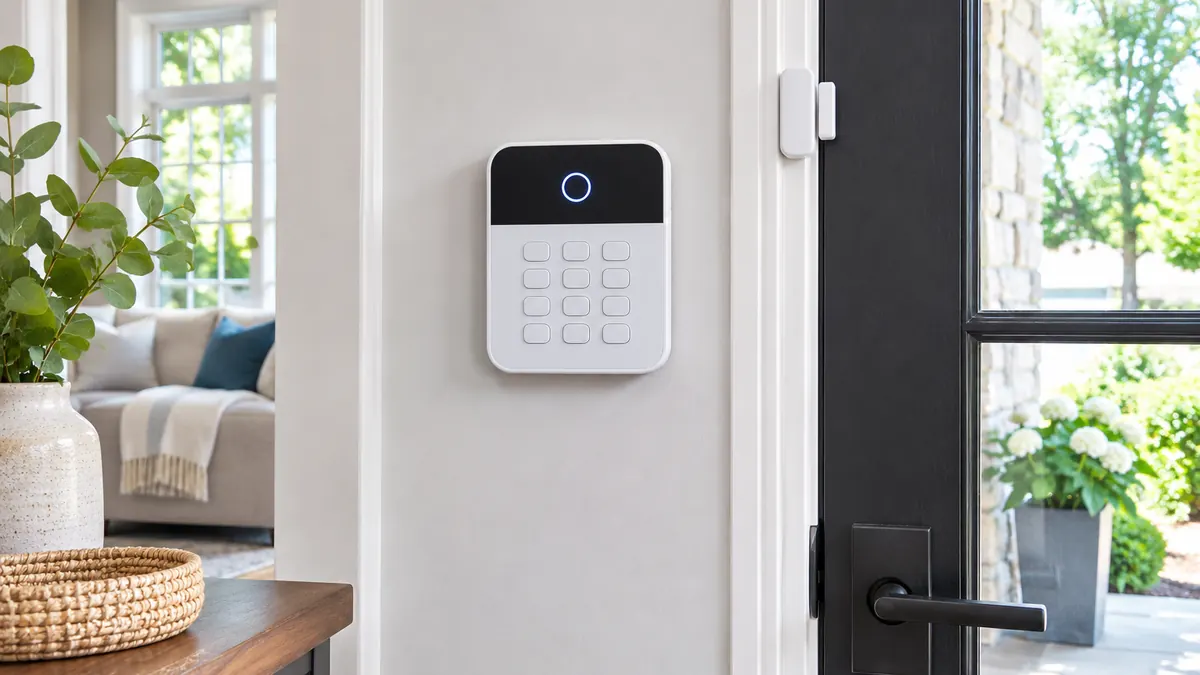
Cameras, video doorbells and alarm system signs show that a home is protected. Many insurers also offer discounts for security devices such as deadbolts and burglar alarms, so it's worth asking yours.
Before you go away: a quick checklist
- Request a mail hold and pause package deliveries.
- Set lights on timers in a few rooms.
- Lock all doors and windows, including upstairs and the garage.
- Ask a neighbor to keep an eye out, and to move any packages or flyers left at the door.
- Wait until you're home to post vacation photos on social media.
- Check that cameras and alarms are working and your phone gets their alerts.
Advertisement
Conclusion
Most of these steps take little time or money: better lighting, stronger locks, holding the mail and keeping valuables out of sight. Together they make a home a much less appealing target. To go further, see our guide to monitored vs self-monitored security systems.
Common questions
Do security signs actually help?
Visible signs, cameras and video doorbells show that a home is protected, which can make it a less appealing target.
How do I hold my mail while I'm away?
You can request USPS Hold Mail online or at your local Post Office. It holds mail for 3 to 30 days.
Can security devices lower home insurance costs?
Many insurers offer discounts for devices such as deadbolts and burglar alarms. Ask your insurer which devices qualify.
Sources and further reading
This guide is general information. Follow the manufacturer's instructions and local rules, and use a licensed professional for electrical work you're not comfortable doing.