What Happens to Solar Panels on Cloudy Days and in Winter
Solar panels keep working when it's cloudy or cold. Here's how much output changes, and why snow matters most.
In this guide
Key takeaways
- Solar panels still produce electricity on cloudy days, but less than in full sun.
- Cold temperatures don't stop panels working. They often run more efficiently when cool.
- Snow covering the panels is what stops production, until it slides or melts off.
- Installers estimate output over a full year, which accounts for cloudy and winter days.
Introduction
One of the most common questions about home solar is what happens when the sun isn't shining brightly. Do panels stop working on cloudy days? Are they useless in winter?
The short answer: they keep working, but output changes. Here's how.
Advertisement
Cloudy days: less light, less power
Solar panels turn light into electricity, and clouds don't block all the light. Panels still produce power on cloudy days, just less than in direct sun. How much less depends on how thick the clouds are. Light, hazy clouds have a small effect. Heavy, dark clouds have a big one.
Cold weather can actually help
It surprises many people, but cold isn't the problem. Solar panels generally work more efficiently when they're cool, and lose some efficiency when they get very hot. A bright, cold, clear winter day can be a good day for solar.
7 more sections · 6 min read
Continue reading this guide
Watch a short ad to read the rest of this guide. You'll only need to do this once for this guide.
Not now, show me another guide →Shorter days mean less energy
The main reason winter output is lower is that days are shorter and the sun is lower in the sky. Panels receive fewer hours of useful light, so they produce less energy overall, even when each hour is efficient.
Snow is the real issue
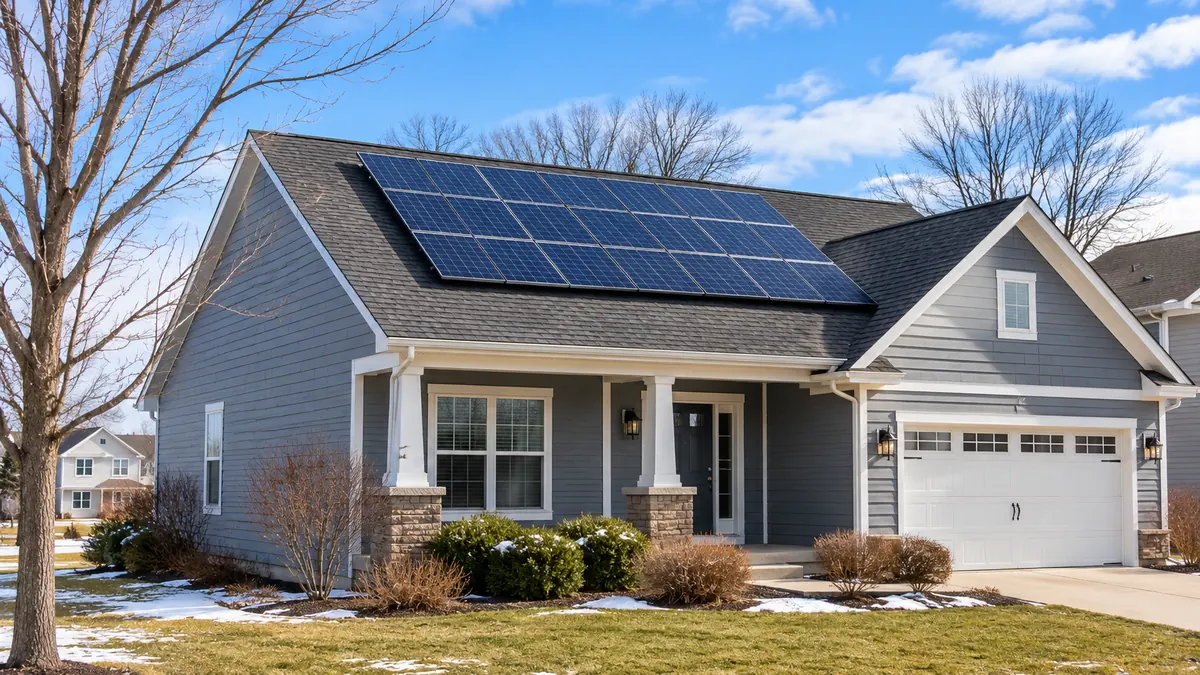
Snow covering the panels blocks the light, and production can drop sharply until it clears. Researchers at the National Renewable Energy Laboratory studied snow losses for fixed-tilt systems across the continental US and found annual losses ranging from 0% to 16%, depending on location.
Panels are smooth and dark, so snow often slides or melts off within a day or two after a storm, especially on steeper roofs. Many manufacturers advise against climbing onto the roof to clear snow, because of the risk of falls and damage to the panels.
Advertisement
Why your yearly total matters most
Solar output naturally goes up and down through the year: higher in long summer days, lower in winter. That's why installers estimate production over a full year, using local weather data that includes cloudy days and winter conditions.
In many areas, homes with solar stay connected to the grid. Depending on local rules, extra power produced on sunny days may earn credits that help offset days when the panels produce less.
Tips for getting the most from your panels
- Keep an eye on production in your solar app, so you notice any sudden drops.
- Trim trees that shade the panels, especially in winter when the sun is lower.
- Ask your installer how to safely handle heavy snow or dirt.
- Check that your system's warranty and monitoring are active.
Advertisement
Common myths, explained
- "Solar doesn't work in cold places." Cold isn't the problem. The amount of sunlight over the year matters more.
- "Clouds stop panels completely." Output drops, but panels keep producing some power.
- "Panels work at night." They don't. Homes use grid power or a battery after dark.
- "Snow ruins panels." Panels are built to handle normal snow loads. Snow cover pauses output until it clears.
What to ask an installer about weather
- How much will the system produce in each month of the year, not just the annual total?
- What snow and shading losses did you include in your estimate?
- What tilt and placement will help snow slide off?
- How will I see production, and will you alert me if output drops unexpectedly?
Advertisement
Conclusion
Solar panels don't stop working when it's cloudy or cold. Clouds and shorter winter days reduce output, while snow cover can pause it until it clears. What matters most is the total over a whole year, which a good installer estimates using local weather.
Common questions
Do solar panels work on cloudy days?
Yes. They produce less power than in full sun, but they don't stop working.
Do solar panels work in cold weather?
Yes. Panels often run more efficiently when they're cool. Lower winter output is mainly due to shorter days.
Should I clear snow off my solar panels?
Snow often slides off on its own. Climbing on a snowy roof is dangerous, so ask your installer before trying to remove snow.
Sources and further reading
This guide is general information. Follow the manufacturer's instructions and local rules, and use a licensed professional for electrical work you're not comfortable doing.