How to Unclog a Drain Without Harsh Chemicals
Simple tools and methods that clear most sink, tub and shower clogs, plus how to keep drains flowing.
In this guide
Key takeaways
- A plunger or drain snake clears most everyday clogs.
- Hair and soap cause most bathroom clogs. Grease causes most kitchen clogs.
- Hot water and baking soda can help with minor buildup, but tools work better on real blockages.
- Drain covers and a few habits prevent most clogs.
Introduction
A slow or blocked drain is one of the most common household problems. Many people reach for a bottle of chemical drain cleaner, but those products can be harsh on skin, eyes and some pipes. Most clogs can be cleared with simple tools you may already have.
Here's what to try, in order.
Advertisement
Start by finding the cause
- Bathroom sinks, tubs and showers: usually hair mixed with soap and toothpaste.
- Kitchen sinks: usually grease and food scraps that have built up over time.
- Several drains blocked at once: may mean a problem further down the main line, which is a job for a plumber.
1. Clean the stopper or drain cover
Many bathroom clogs sit just below the surface. Lift out or unscrew the stopper and clean off hair and gunk. It's not pleasant, but it often fixes the problem in seconds.
8 more sections · 6 min read
Continue reading this guide
Watch a short ad to read the rest of this guide. You'll only need to do this once for this guide.
Not now, show me another guide →2. Use a plastic drain hair tool
Thin plastic strips with small barbs, sold at hardware stores, slide down the drain and pull hair out when you lift them. They're inexpensive and very effective on bathroom drains.
3. Try a plunger
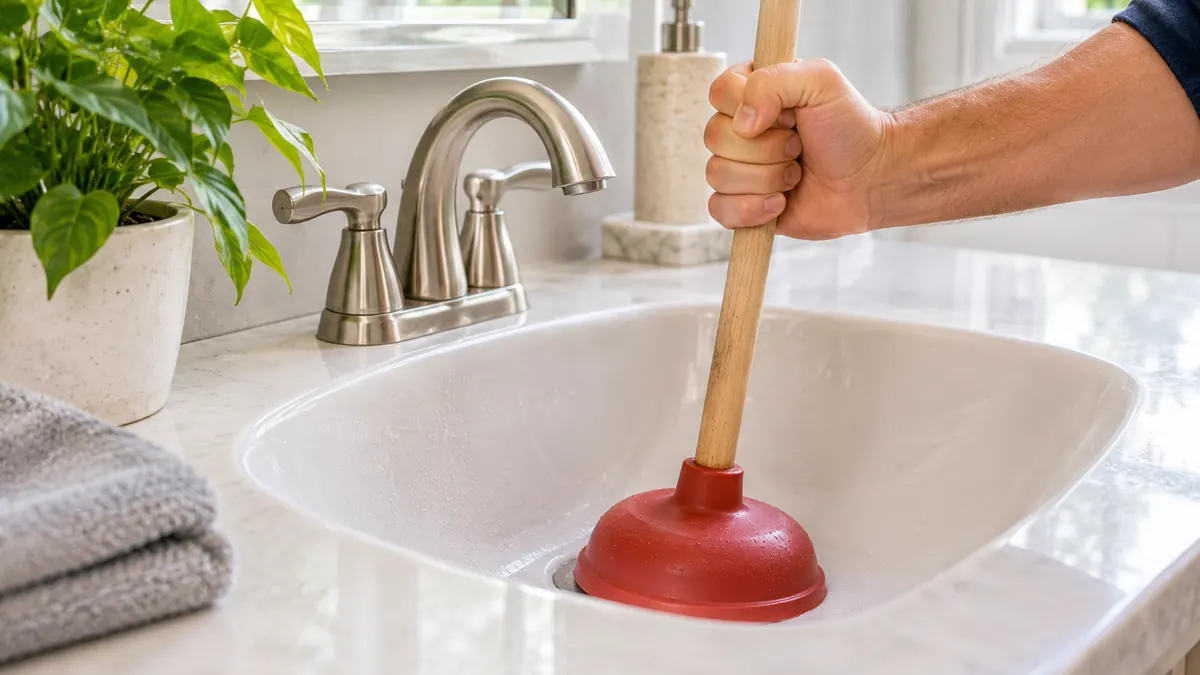
Use a cup plunger for sinks and tubs. Fill the sink with a few inches of water so the plunger seals, cover the overflow hole with a damp cloth, then plunge firmly up and down for 20 to 30 seconds. For double kitchen sinks, block the other drain while you plunge.
Advertisement
4. Use a drain snake
A drain snake, or auger, is a flexible metal cable you feed into the drain. Turn the handle as you push it in until you feel resistance, then twist and pull back to break up or hook the clog. Small hand-held snakes are inexpensive and reach most sink and tub clogs.
5. Clean the P-trap under the sink
The curved pipe under a sink, called the P-trap, catches debris. Put a bucket underneath, unscrew the slip nuts by hand or with pliers, remove the trap and clean it out. Reattach it hand-tight and run water to check for leaks.
Advertisement
6. Hot water and baking soda for minor buildup
For a drain that's slow rather than blocked, pour in a few tablespoons of baking soda followed by a cup of white vinegar, wait 15 minutes, then flush with hot water. It can help loosen minor buildup, but it won't clear a real blockage. Use hot tap water rather than boiling water if you have plastic pipes.
How to keep drains flowing
- Use drain covers or hair catchers in showers and tubs.
- Never pour grease or cooking oil down the sink. Let it cool and throw it in the trash.
- Scrape plates into the trash before rinsing.
- Run hot water for a few seconds after using the kitchen sink.
- Clean stoppers every few weeks.
Advertisement
What not to do
- Don't mix different drain cleaners, or use a plunger after pouring in a chemical cleaner. Splashes can burn skin and eyes.
- Don't force a snake hard against a fixed point. You could damage the pipe.
- Don't pour boiling water into plastic pipes or a porcelain sink that may crack.
- Don't keep using a fixture that's backing up into another one. That usually means a deeper blockage.
Conclusion
Most clogs can be cleared with a stopper clean-out, a hair tool, a plunger or a drain snake, without harsh chemicals. If several drains are slow at once, water backs up into other fixtures, or nothing works, call a plumber.
Common questions
Is baking soda and vinegar good for clogs?
It can help with minor buildup in a slow drain, but it rarely clears a real blockage. A plunger or drain snake usually works better.
Are chemical drain cleaners bad for pipes?
Some are harsh on skin, eyes and certain pipes, and can be dangerous if mixed with other products. Many plumbers suggest trying mechanical methods first.
When should I call a plumber?
Call if several drains are slow at once, water backs up into other fixtures, there's a sewage smell, or tools haven't cleared the clog.
This guide is general information. Follow the manufacturer's instructions and safety advice. If you're unsure, call a qualified professional.